THIRTY YEARS IN THE CLASSROOM
I’ve spent my career teaching kids what happens next.
PiviPets started as a 3D printer I got for my birthday. It turned into something I’ve been working toward for thirty years without knowing it.
My day job is helping students figure out their future
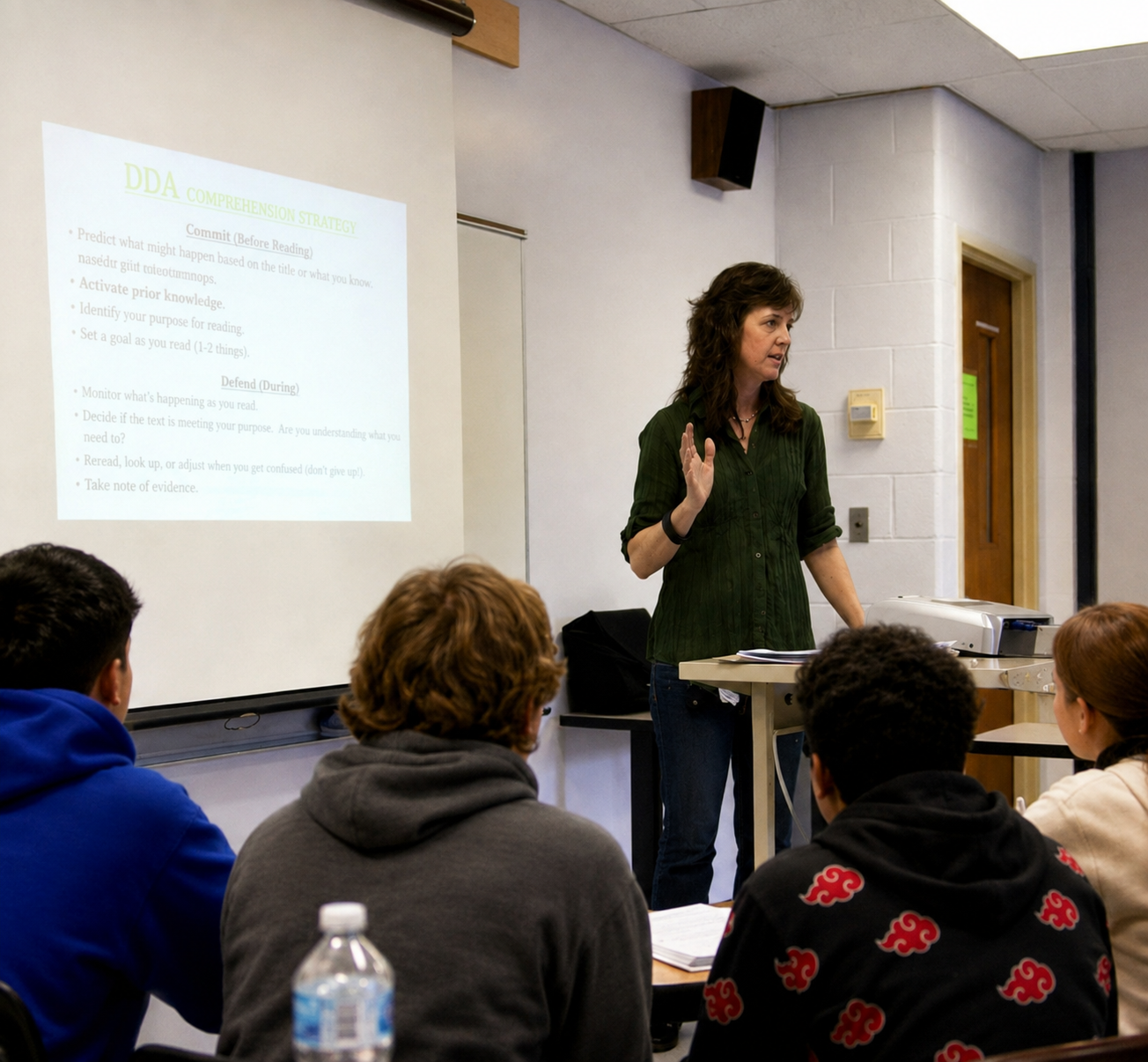
I’m a special education teacher, and I’ve been one for more than thirty years — ten in middle school, the rest in high school.
I work with transitioning youth: diploma-bound and certificate-bound students who are trying to answer the hardest question anyone asks a teenager. What do you want to do after this? College, a career, a job, a pathway — my job is to help them find the answer that fits them, not the one that fits a form.
I’ve placed students in work study sites across the county: elementary schools, childcare centers, and plenty of places in between. I’ve sponsored Best Buddies at my school for over twenty years, and I’m one of our National Honor Society sponsors too.
Thirty years of this teaches you one thing above everything else. Everybody needs connection. Not just the little ones. The high schoolers need it, the young adults I place in job sites need it — and honestly, so do the adults. I know that last part for certain, because grown adults pick up these animals at craft fairs and light up exactly the way a six-year-old does.
Everybody needs connection. It doesn’t stop mattering when you turn twelve.
Then someone gave me a 3D printer
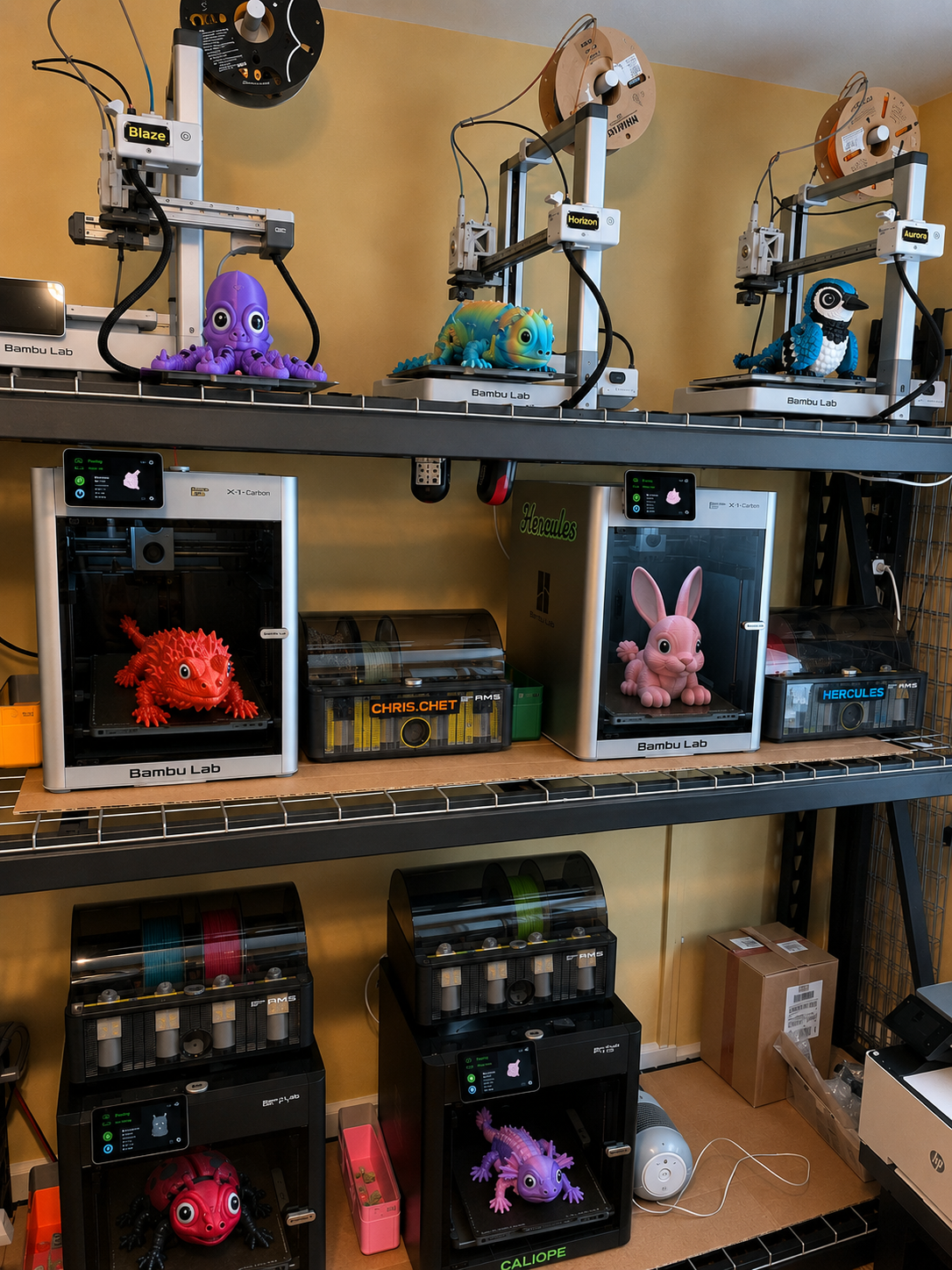
I got one for my birthday and fell down the rabbit hole. I learned everything I could — settings, filaments, supports, all of it.
And I printed exactly what everyone else was printing. Articulated dragons. Fidgets. Holiday minis. They sold well at craft fairs, and I still make them. But I could see where it was going. The market was filling up with the same things, and being one more table selling the same dragon wasn’t a business. It was a hobby with a booth.
I knew I needed to make something that was actually mine.
The idea came from a vendor selling live lizards
I was at a fair and watched a vendor selling live mini lizards. People were transfixed — not by the animal exactly, but by the fact that it was theirs, in a container, going home with them.
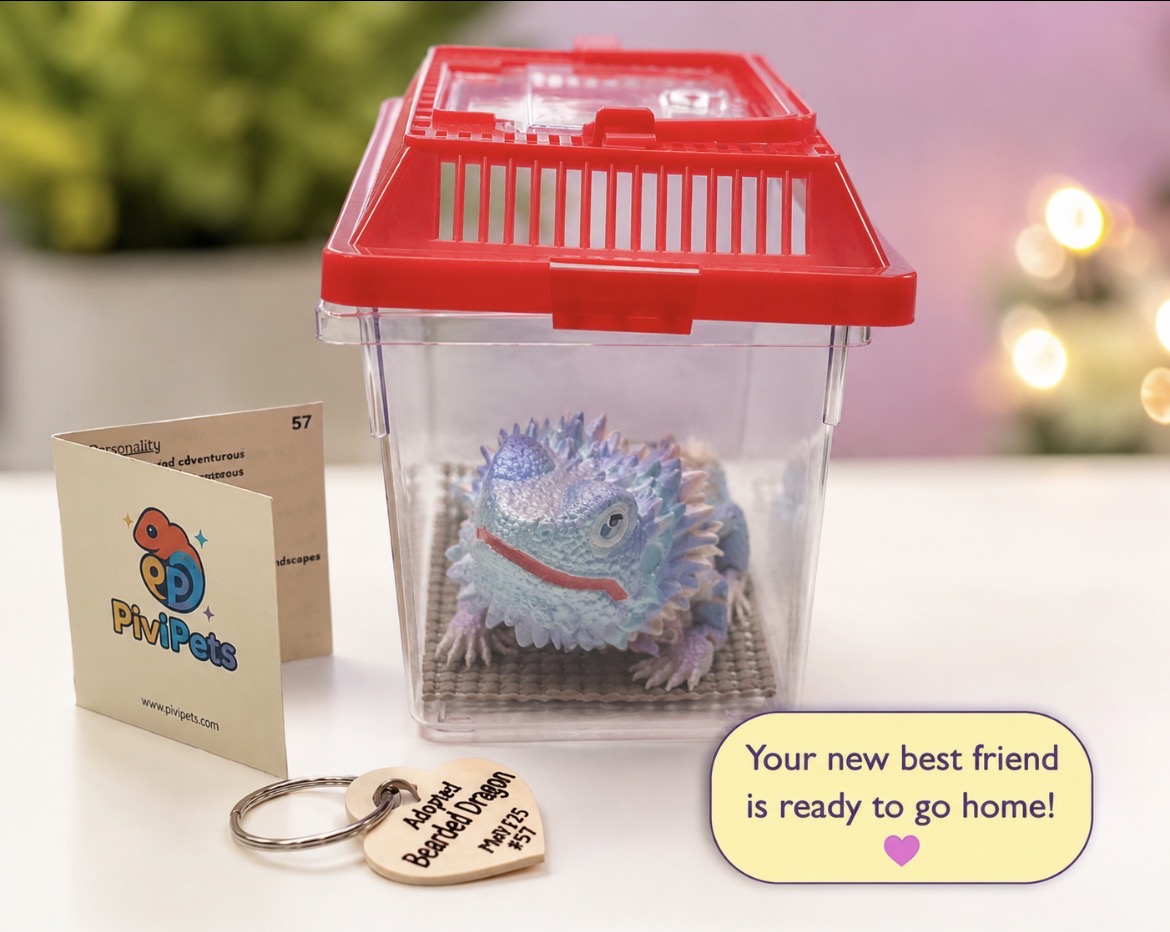
So I tried it. I put one of my printed animals in a little carry container.
People loved it. Same reaction, and it clicked: it isn’t a toy if it arrives like a pet. The container changes what the thing is. It stops being an object you bought and becomes somebody you brought home.
That was the whole business, sitting there on a folding table.
Then I made it do what I do
A cute animal in a box is a nice product. But I’m a teacher, and I wanted this to actually do something.
So I gave every animal three things:
- A name of its own. Not a species — an individual. No two PiviPets share a name.
- A personality. Traits that make it a specific someone rather than a generic anything.
- A PiviPower. One social-emotional skill, written in language a child can repeat.
That was the start. Since then each animal has gained a passport card, a pledge, a habitat, a keytag, and its own PiviPages storybook — but the three things above are still what makes a PiviPet a PiviPet.
The PiviPowers are the part I care most about. Quiet courage. Starting over. Speaking up. Brave change. These are the exact things I spend my working life teaching — how to name a feeling, how to ask for help, how to try again after something goes wrong.
The difference is that a PiviPet doesn’t feel like a lesson. Nobody has to call it one. A child holds an axolotl whose PiviPower is starting over, and the conversation happens on its own.
Collected in series.
I built the collection deliberately: themed series, with a group of animals in each one. The collection keeps growing, and new series join as I design them.
The series so far:
- Reptiles & Amphibians
- Rodents & Small Mammals
- Birds & Feathered Friends
- Insects & Creepy Crawlies
- Sea Creatures
- Forest & Woodland Animals
Part of that is collectibility — there’s a real satisfaction in completing a set. But part of it is that children genuinely want to know about animals, and a series gives them a reason to learn about six they might never have looked at twice.
Before PiviPets, there was PiviPrints
The dragons, the fidgets, the seasonal minis — that’s where this began. You won’t find them here, though, they’re craft fair only now, sold in person while supplies last. If you spot me at a show, that’s your chance.
Printed and finished by hand in Maryland
Every PiviPet is printed to order, cleaned up, assembled and inspected by hand. Nothing sits in a warehouse waiting.
I paint the eyes and other details by hand, one animal at a time. It’s the slowest part of making these and the part I’d never hand off — a face is what turns a printed object into somebody, and you can’t automate that.
They’re printed in PLA — a plant-based plastic made from corn starch and sugarcane rather than petroleum.
Every pet is printed in multicolor filament that shifts as it prints, which means no two ever come out the same. Not even I know what the colors will be until it’s finished — and because the details are painted by hand, no two are identical even after that.
Where I hope this goes
Best Buddies has been part of my school life for more than twenty years, and a good share of what I earn at craft fairs goes straight back into that program.
The longer-term hope is bigger. I’ve spent my career helping students find their first jobs — finding workplaces that see what a young person can do rather than what they can’t. If PiviPets ever grows enough to need more hands, I’d like it to be one of those workplaces.
That’s a direction rather than a promise. But it’s the reason I keep going after a full day of teaching.
Still teaching. Just with more animals.
I haven’t left the classroom. I’m still there every day, still working with students on what comes next.
PiviPets is the same work in a different form: the thing I wished existed when I was trying to explain to a teenager that starting over isn’t failing.
— Laura, founder